
May, 2026
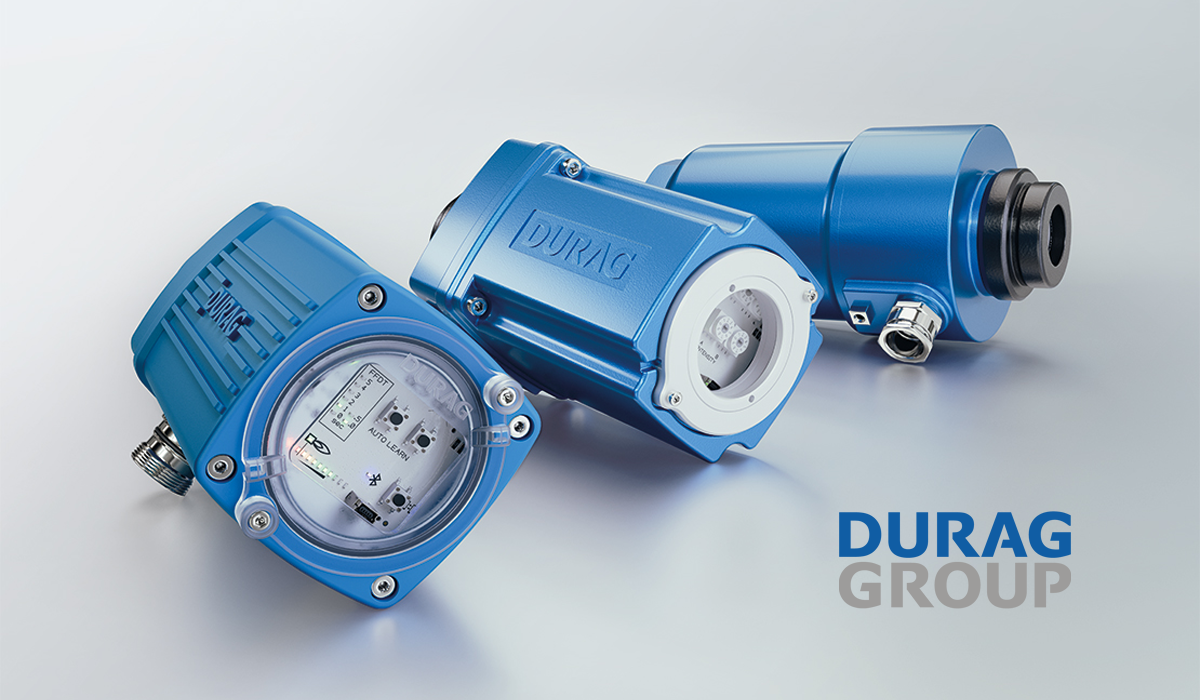
The flame supervisor from DURAG is the new generation of flame supervision for demanding industrial applications. Designed to maximize safety, availability operational and ease of use, this device redefines monitoring of combustion across all types of fuels and configurations.
This sensor is a compact optical flame scanner that enables continuous and reliable flame detection in industrial thermal processes, including furnaces, boilers, turbines and petrochemical processes. It is a universal solution for processes involving heat generation or thermal transformation.
Thanks to its adaptable dual optics, it is compatible with all fuels: gas, fuel oil, coal, biomass or hydrogen, and applicable in single- and multi-burner configurations.
The flame supervisor from DURAG is not just a flame detector; it is a complete solution for intelligent supervision that ensures safety, operational continuity and ease of use in any combustion process.
Maximum certified safety:
SIL-3 certification for critical applications.
Redundant dual-channel architecture (fail-safe).
safe landing function: safe operation for up to 22 h, 50 min. in the event of an internal failure.
Compatible with cybersecurity standards (IEC 62443, optional).
High plant availability:
Continuous monitoring with no “dead time”.
Prevents unplanned shutdowns and associated costs.
Outputs: analog flame intensity signal + alarms.
LED indicators for status, intensity and diagnostics.
Fast commissioning:
Auto-learn function: automatic configuration in minutes.
Preconfigured modes according to combustion type.
Intuitive operation and connectivity:
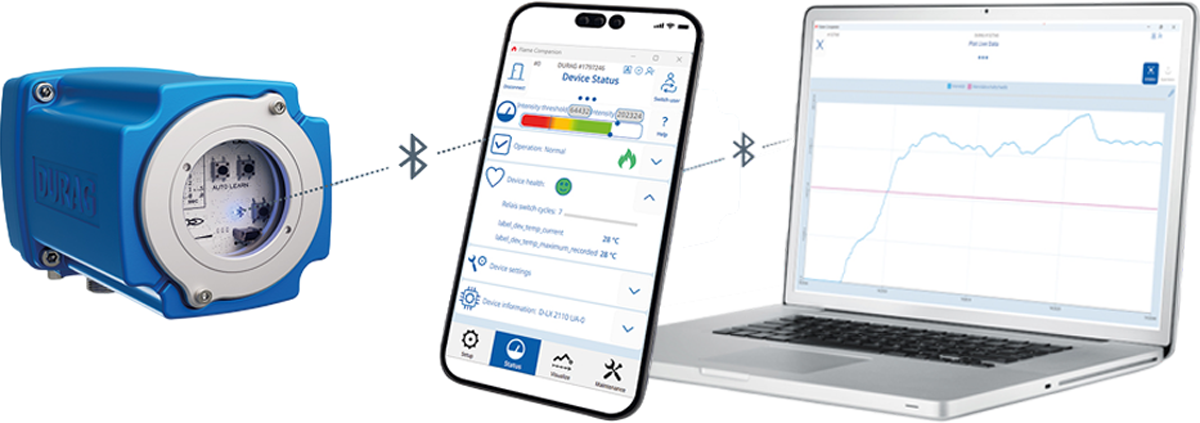
Control via Flame Companion App (Android/Windows).
Connectivity via Bluetooth, USB or Modbus.
Parameterization and diagnostics from a mobile phone or laptop.
Total flexibility:
Detection using UV + photodiodes/IR.
Adaptable to multiple fuels and conditions.
Fiber optic option for extreme or hard-to-access areas.
Typical applications:
Power generation and utilities.
Cement and materials, oil&gas and petrochemicals.
Waste incineration (waste to energy).
Steelmaking and metallurgy.
Chemical industry and refining.